
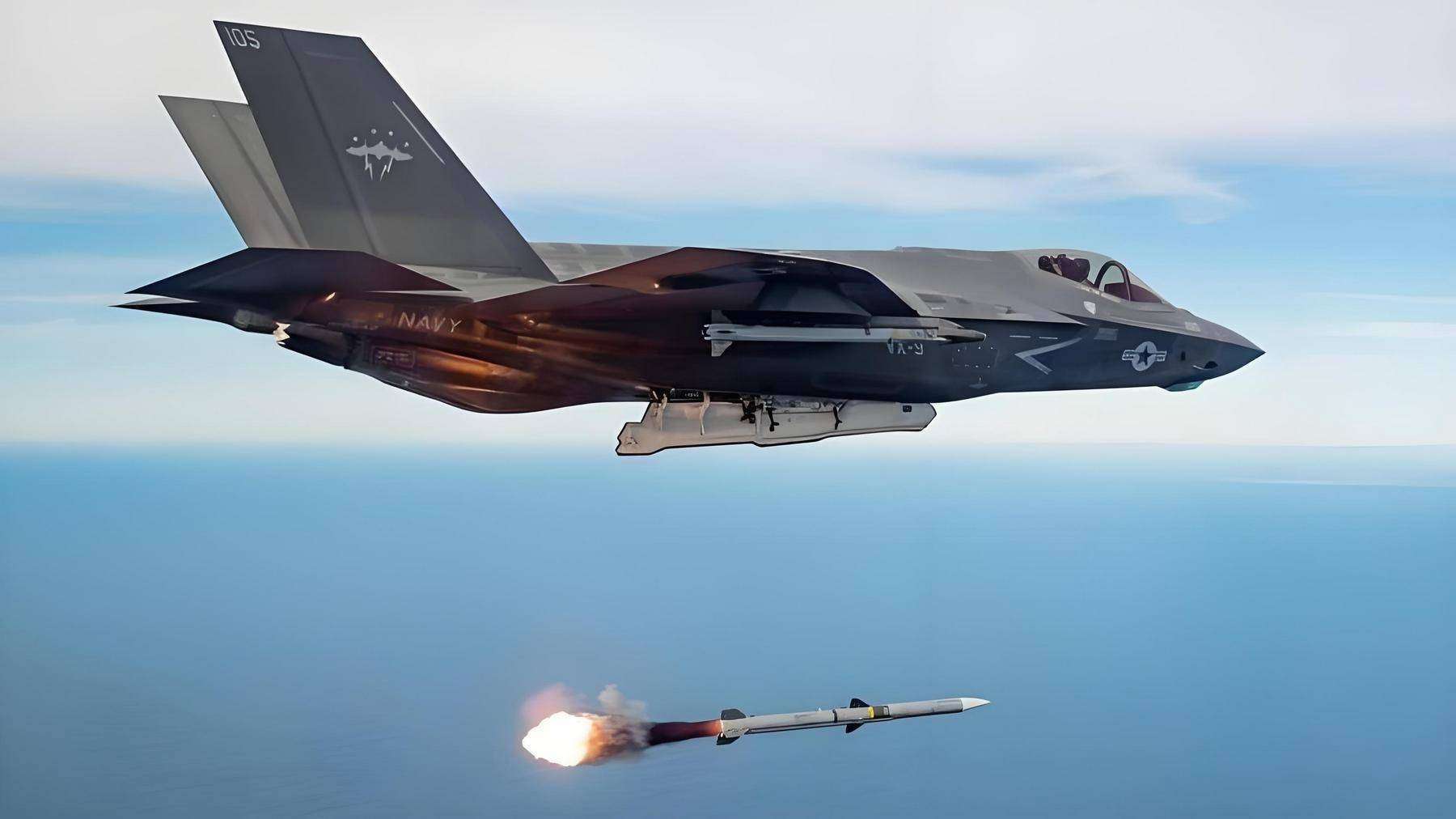
According to comprehensive reports from Global Times, recently, an American aerial photographer captured several U.S. Navy test aircraft taking off from Eglin Air Force Base in Florida. Among them, an F/A-18F Super Hornet test jet from VX-31 squadron was spotted carrying a previously unseen air-to-air missile. Observers widely speculate that this is the long-shrouded next-generation U.S. Navy long-range air-to-air missile—the AIM-260. These are the first high-definition photos of the missile in action, immediately sparking extensive discussion among military experts. As the official successor to the U.S. Air Force and Navy’s operational AIM-120 medium-to-long-range air-to-air missiles, the AIM-260 project was not officially initiated until 2017, and its progress lagged far behind similar programs in other countries. In fact, as early as 1992—the same year the basic AIM-120 entered large-scale production—the U.S. military already envisioned developing a new generation of long-range air-to-air missiles. By 1997, the Department of Defense formally launched the Dual-Range Missile program, with development led by DARPA, the Defense Advanced Research Projects Agency. In this sense, the U.S. military started early on the next-generation missile program, but progress was slow.
At that time, DARPA set high technical standards for the dual-range missile: it had to match the AIM-120’s general dimensions, have a minimum range of 300 meters, and a maximum range of 185 kilometers. A fighter jet armed with only this missile could handle both close-in dogfights and beyond-visual-range engagements. DARPA also demanded strong anti-jamming capabilities, accurate friend-or-foe identification, high guidance precision, and rapid interception. To achieve these objectives, the missile was planned to incorporate cutting-edge technologies including a variable-flow ramjet engine, conformal array seekers, combined direct/aileron control, and directional warheads. By 2003, with the F-22 and F-35 fifth-generation stealth fighters nearing large-scale service, new requirements were added: the missile should have limited air-to-surface and air-to-sea capability, allowing these stealth jets to carry a single type of missile for multi-domain attacks, addressing limitations imposed by weapon bay size. Consequently, in 2004, the dual-range missile project was renamed the Joint Dual-Role Air Dominance Missile program. By 2008, Boeing, Lockheed Martin, and Raytheon submitted competing designs to the U.S. military. In November 2010, the designs underwent military evaluation, with plans to enter engineering and production phases by 2013, aiming for initial operational capability by 2025. However, the program’s complexity, high technical difficulty, and escalating costs led the Department of Defense to cancel it in 2012, ending the next-generation missile initiative in failure. While the Joint Dual-Role Air Dominance Missile project progressed and was eventually canceled, the AIM-120 missile continued evolving from the basic A model to B, C, and the latest D variant. Although the AIM-120D reportedly achieved a maximum range of 160 kilometers, maintaining its superiority among air-to-air missiles worldwide, a formidable competitor was quietly catching up and even surpassing it in some respects. Learning from the earlier program’s overambitious pursuit of multi-domain capability, the U.S. adopted a more pragmatic approach with the Joint Advanced Tactical Missile project. The AIM-260 returned to focusing purely on air-to-air roles, abandoning multi-domain ambitions. Retaining dimensions similar to the AIM-120, the AIM-260 emphasized extending maximum range. Current estimates suggest its range starts around 190 kilometers, possibly reaching 200–265 kilometers. The missile is powered by a dual-pulse solid rocket, enhancing both propulsion and terminal maneuverability.
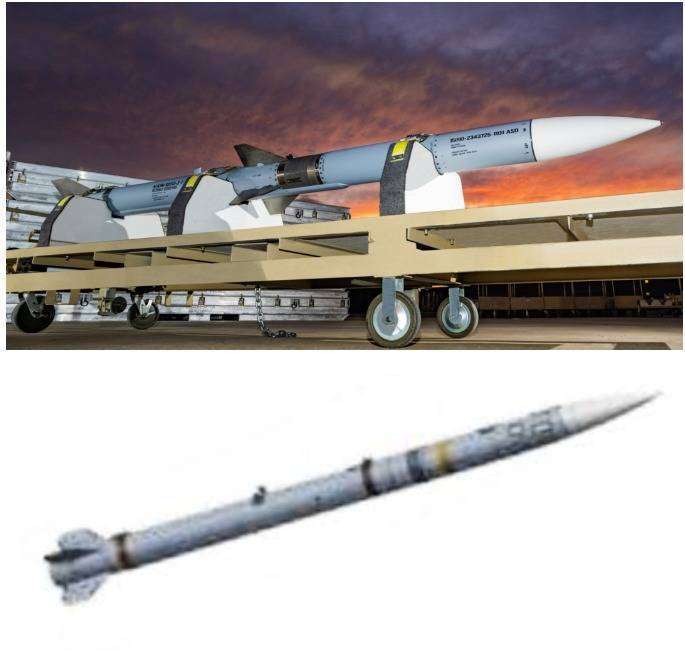
The AIM-260 may also utilize a high-arc trajectory to further extend range: instead of flying straight, it climbs to thinner, less resistant air before diving onto its target. Advanced features improve hit probability, including thrust-vectoring paired with four tail fins for high maneuverability against high-G targets; a multi-mode seeker integrating active phased-array radar with infrared and passive radar; and full-spectrum networked cooperative combat capability. Nevertheless, development has been repeatedly delayed. Originally, the U.S. aimed to complete flight testing by 2021 and achieve initial operational capability by 2022, but progress has lagged significantly. Concerns over falling behind in long-range air-to-air missile capability—heightened by last year’s India-Pakistan aerial engagements—have intensified the urgency to accelerate AIM-260 development.