
On May 26, British media reported that since December of last year, nine countries had withdrawn from the coalition, initiated by the Czech Republic, once reached a peak of 18 member states. Since 2024, it had supplied Ukraine with over 4 million large-caliber shells, accounting for half of Ukraine’s total large-caliber ammunition stockpile. Now, with membership halved, even the initiating country feels the strain. Czech President and former NATO Military Committee Chair Pavel has announced plans to discuss the coalition's , indicating that even the founder is questioning the necessity of its existence. So why have allies, once vocally committed, collectively stepped back in just half a year?

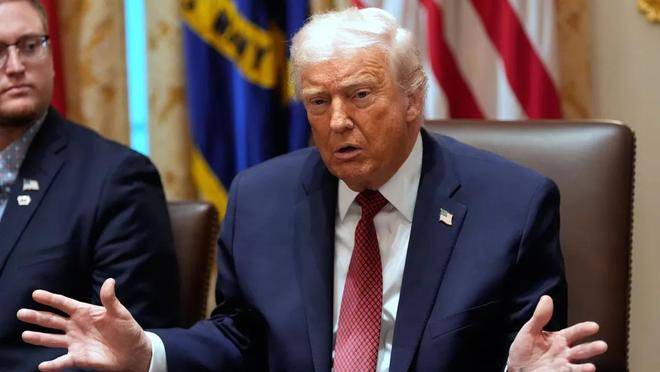
The real driver behind the withdrawal of the nine nations is the United States. In early May 2026, the Acting Auditor General of the U.S. Department of Defense confirmed at a congressional hearing that the Trump administration’s proposed FY2027 defense budget allocated no military aid to Ukraine. This marks a stark shift: since the outbreak of the war in 2022, the U.S. had provided Ukraine with over $170 billion in various forms of aid, more than half of all Western support. Now, the largest contributor has officially cut the lifeline. U.S. direct military aid to Ukraine fell from an annual average of $60–70 billion under Biden to less than $4 billion in FY2025. In March 2026, Congress rejected a new $61 billion aid package, and by May, the Trump administration planned to contribute not a single dollar. Even more critical is the disruption of physical supplies: 110 Patriot interceptors scheduled for delivery to Ukraine in 2026 were rerouted to the Middle East. Key ammunition such as HIMARS rockets, 155mm shells, and Stinger missiles—essential for maintaining Ukrainian frontlines—were redirected to Israel and U.S. forces facing Iran. U.S. forces themselves admit that prolonged campaigns in Iraq and Afghanistan depleted stockpiles faster than production could replenish. With conflict flaring in Iran, limited munitions capacity is naturally prioritized for U.S. forces, leaving Ukraine waiting. Trump himself remarked that Ukraine has no cards in negotiations, signaling that the U.S. sees no reason to continue investing in a losing bet. Strategically, the U.S. has shifted focus from both the Middle East and Europe to primarily the Middle East. The Russia-Ukraine conflict has been downgraded from a strategic attrition to be maintained to a sunk cost not worth further investment. The Trump administration even leveraged aid suspension as a bargaining tool, pressuring European allies to join its voluntarily-led Hormuz Strait coalition to share the Middle East military burden.
The collapse of the supply because direct procurement through individual defense ministries was politically sensitive and fiscally transparent. Through the Czech-led coalition, funds were pooled from member states and ammunition purchased from global markets with relatively opaque accounting. In 2024, this mechanism ran efficiently, with 18 nations participating at its peak, supplying up to half of Ukraine’s ammunition needs. But a fatal flaw existed: once the largest contributors withdrew, the smaller members could not sustain the coalition. After the U.S. stepped back, the fragile structure began to crumble. Even the Czech Republic wavered; in December 2025, newly elected Prime Minister Babi? publicly pledged not to burden Czech citizens with military aid to Ukraine. His reasoning was domestic: the Iran conflict drove up energy prices, and limited public funds should prioritize the Czech population under economic strain. When the lead nation treats support as a cuttable part of the budget, other allies naturally step back. This shows that when a cost-sharing mechanism lacks enforceable constraints, freeriders increase, placing heavier burdens on committed members and ultimately causing collapse. Under such pressures, European military support for Ukraine shifted from help if possible to limited damage control. By summer 2025, European monthly aid had dropped by 57%. In 2026, as weapon stockpiles dwindled and fiscal deficits soared, continued support risked further depleting national defense reserves. European capacity to aid Ukraine had transitioned from a question of willingness to a question of capability.
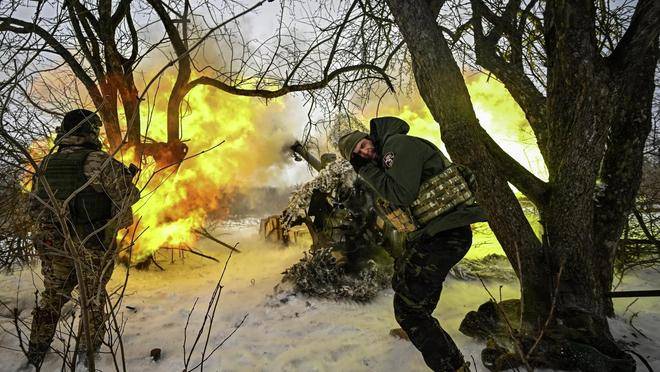
The consequences of Ukraine’s ammunition shortage are dire. Along a frontline stretching over 1,000 kilometers, Russia’s sustained firepower advantage across multiple sectors has made it increasingly difficult for Ukraine to maintain equilibrium. Disrupted supply chains translate directly into frontline survival crises and accelerated territorial losses. Battlefield dynamics demonstrate this crushing pressure: the Russian Ministry of Defense reported that on May 16, Russian forces liberated Borovaya and Kutkovka in Kharkiv Oblast, advancing westward along broad fronts. By May 27, they controlled Granov in Kharkiv and Vozdvyzhevka in Zaporizhzhia Oblast. Within 11 days, Russian forces captured multiple settlements in the Kharkiv direction, accelerating their advance. The reason for this pace is not just tactical adjustments but Ukraine’s loss of Western aid. Halved large-caliber shell supply means Russia holds overwhelming artillery superiority. In this classic war of attrition, whoever has more shells suppresses the enemy’s positions, destroys defenses, and clears obstacles ahead of infantry assaults.
Signs of morale collapse within Ukrainian forces are emerging. Russian sources report extreme incidents at the Kharkiv frontline where Ukrainian command allegedly used artillery to punish soldiers refusing to evacuate positions, signaling a breakdown of trust between command and frontline units. When a military enforces positions through violence against its own, it indicates fractures in command authority and combat will, which only spread as battlefield pressure grows. Ukraine lost sea control after the Crimea crisis. While land defenses were reinforced with NATO intelligence and firepower, autonomous air defense was never fully achieved. Now, with foreign munitions cut off, Ukrainian air defense units can only perform limited protective tasks, and domestic industrial capacity is about one-quarter of pre-war levels. Dependence on external aid has become near-total. This reliance is Ukraine’s true vulnerability. Its entire military existence hinges on continuous Western support. As donor nations face their own strategic and economic constraints—the U.S. focused on Middle East conflicts, Europe weakened by economic stagnation and public impatience over paying for someone else’s war—Ukraine’s dependence turns from a strategic asset into a strategic liability. Zelensky’s maneuvering room is visibly shrinking; when Ukraine is pushed to the sacrificial position, there will be no leverage left for negotiations.