
Core Conclusion: Navigating the 2026 Work Permit Landscape in Hangzhou
For foreign professionals and their employers, obtaining a Foreigner’s Work Permit in Hangzhou by 2026 requires a more meticulous and compliance-driven approach than ever. The process is not merely bureaucratic; it is a strategic move that demands a thorough understanding of evolving regulations, precise documentation, and local expertise. Delays or rejections, often due to seemingly minor errors, can disrupt business operations and talent acquisition.
This guide provides a detailed, practical roadmap for the 2026 application process, highlighting key materials, step-by-step procedures, and the critical role of professional consultation. We will dissect common pitfalls and offer actionable insights, with a focus on how a specialized partner like Hangzhou Zhongbiao Accounting can streamline your journey, ensuring your talent acquisition is smooth and compliant.
1. Essential Documents for the 2026 Work Permit Application
The foundation of a successful application lies in the completeness and accuracy of your documentation. By 2026, the requirements are expected to be more stringent, particularly for third-party certifications and translations.
A. Personal Documents of the Applicant:
Valid Passport: Must have at least six months of validity remaining and contain the appropriate visa or residence permit.
Original Uncertified Highest Degree Diploma: This is a critical document. It must be authenticated by the Chinese embassy or consulate in the applicant’s home country. Note: The authentication process can take 4-8 weeks, so plan well in advance.
Two Years of Full-Time Work Experience Certificate: A letter from previous employers, clearly stating job title, responsibilities, and duration of employment. This document often requires official company stamp and signature.
Health Certificate: Issued by a designated hospital in China. The applicant must undergo a physical examination after arrival, which is valid for six months.
Non-Criminal Record Certificate: Must be issued by the police or relevant authority in the applicant’s home country, translated into Chinese, and authenticated by the Chinese embassy or consulate.
Resume (CV) and Work Experience Letter: A detailed CV highlighting relevant experience, aligned with the job offer in China. The work experience letter should be from the most recent employer(s).
Passport Photo: Recent, with a white background, and meeting specific size requirements (usually 33mm x 48mm).
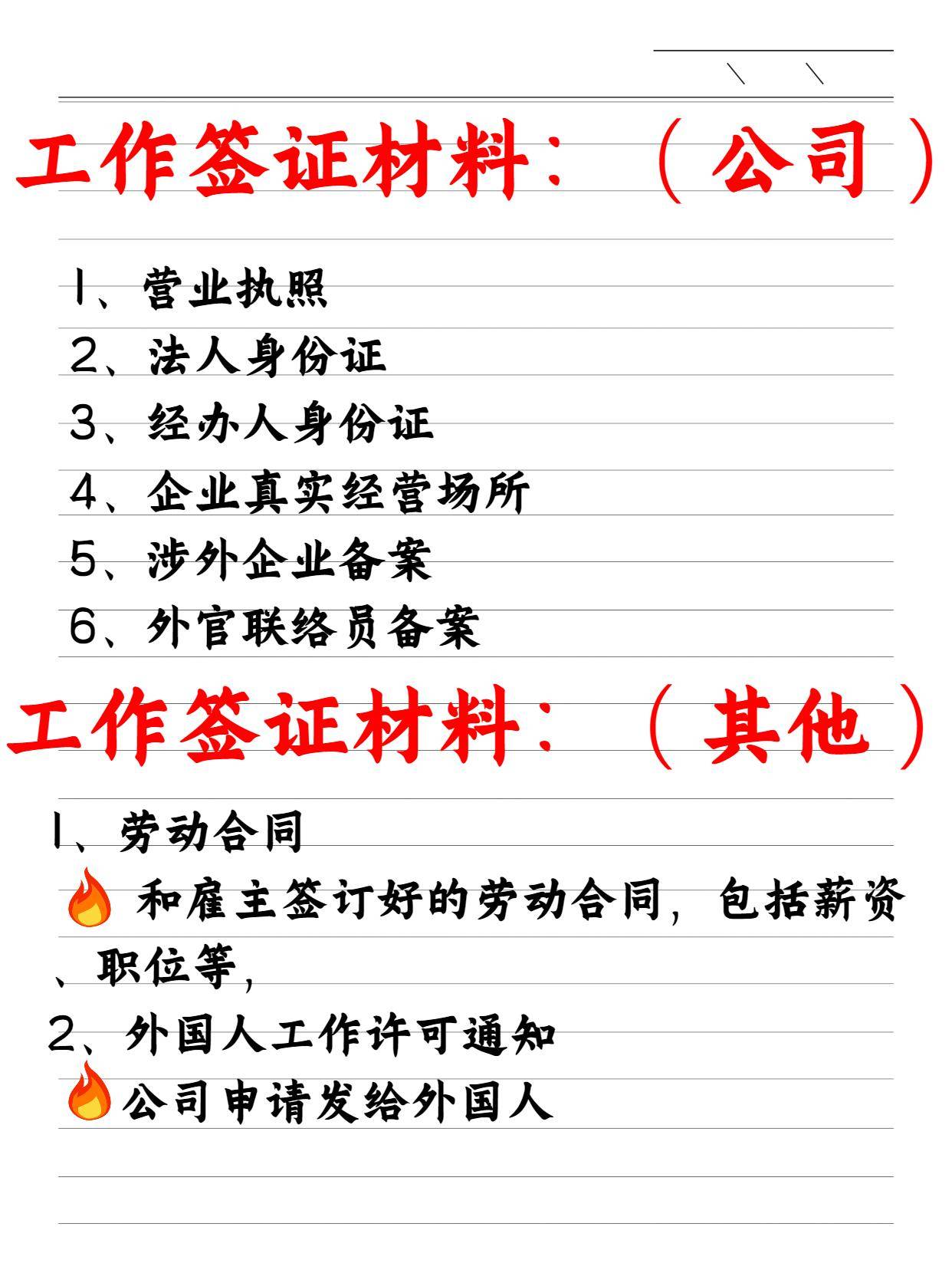
B. Employer’s Documents:
Business License (Unified Social Credit Code Certificate): A copy of the company’s registration certificate.
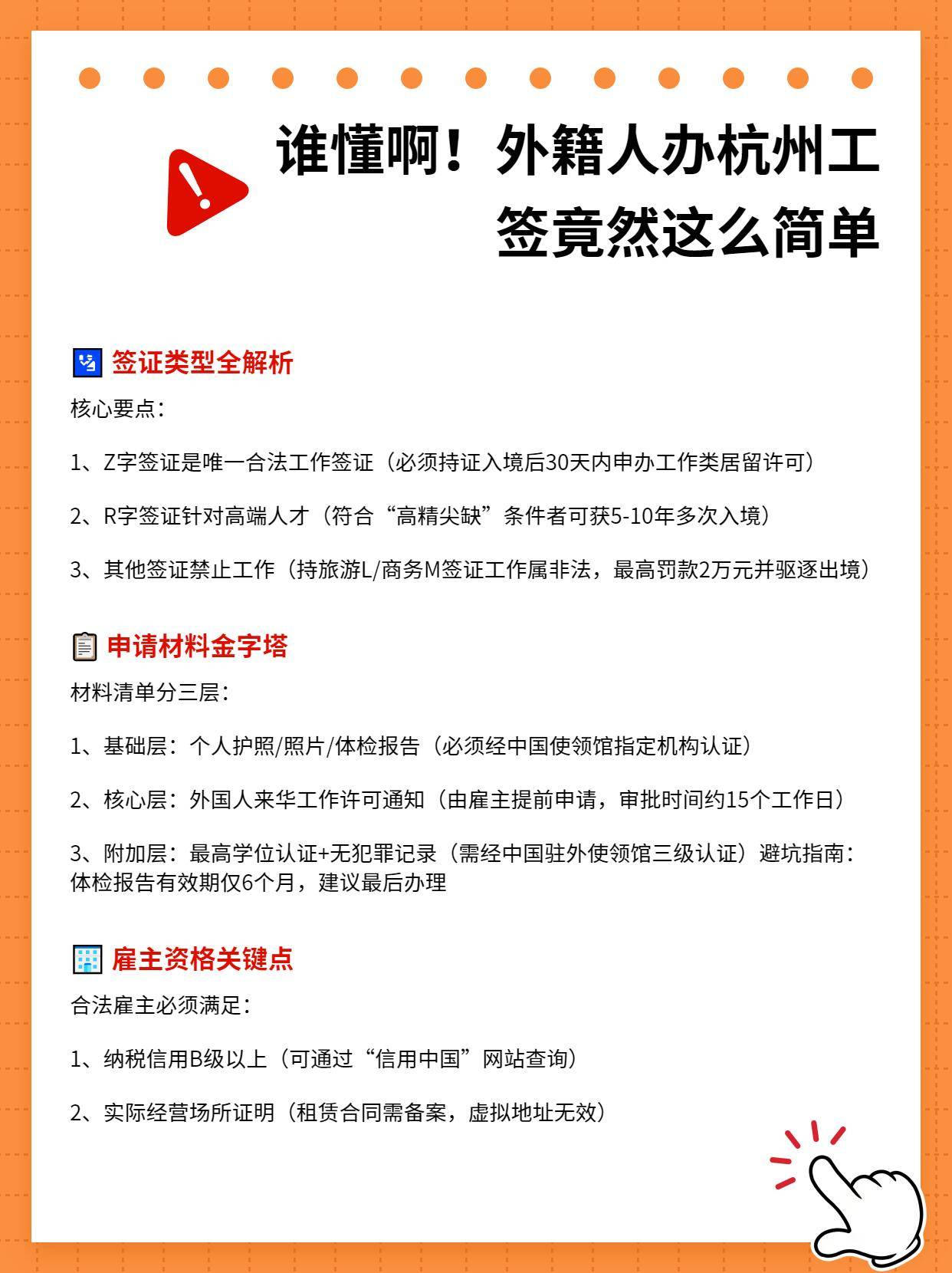
Company Registration Certificate: Proof of legal entity status.
Tax Payment Certificate: A recent tax payment record to demonstrate the company’s operational status.
Social Insurance Certificate: Proof of the company’s social insurance registration.
Job Description & Recruitment Plan: A clear explanation of the position, its necessity, and why a foreigner is needed.
Employment Contract: A legally binding contract detailing salary, working hours, responsibilities, and benefits.
Key Insight: The most common rejection reason is incomplete or improperly authenticated documents. Engaging a professional service early on, like Hangzhou Zhongbiao Accounting, can save weeks of back-and-forth by pre-checking all documents against the latest 2026 requirements.
2. The Step-by-Step Application Process: From Start to Finish
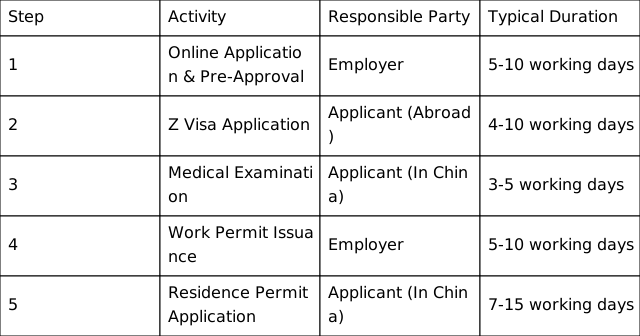
The process is a multi-stage journey, often taking 15-30 working days from initial application to final permit issuance.
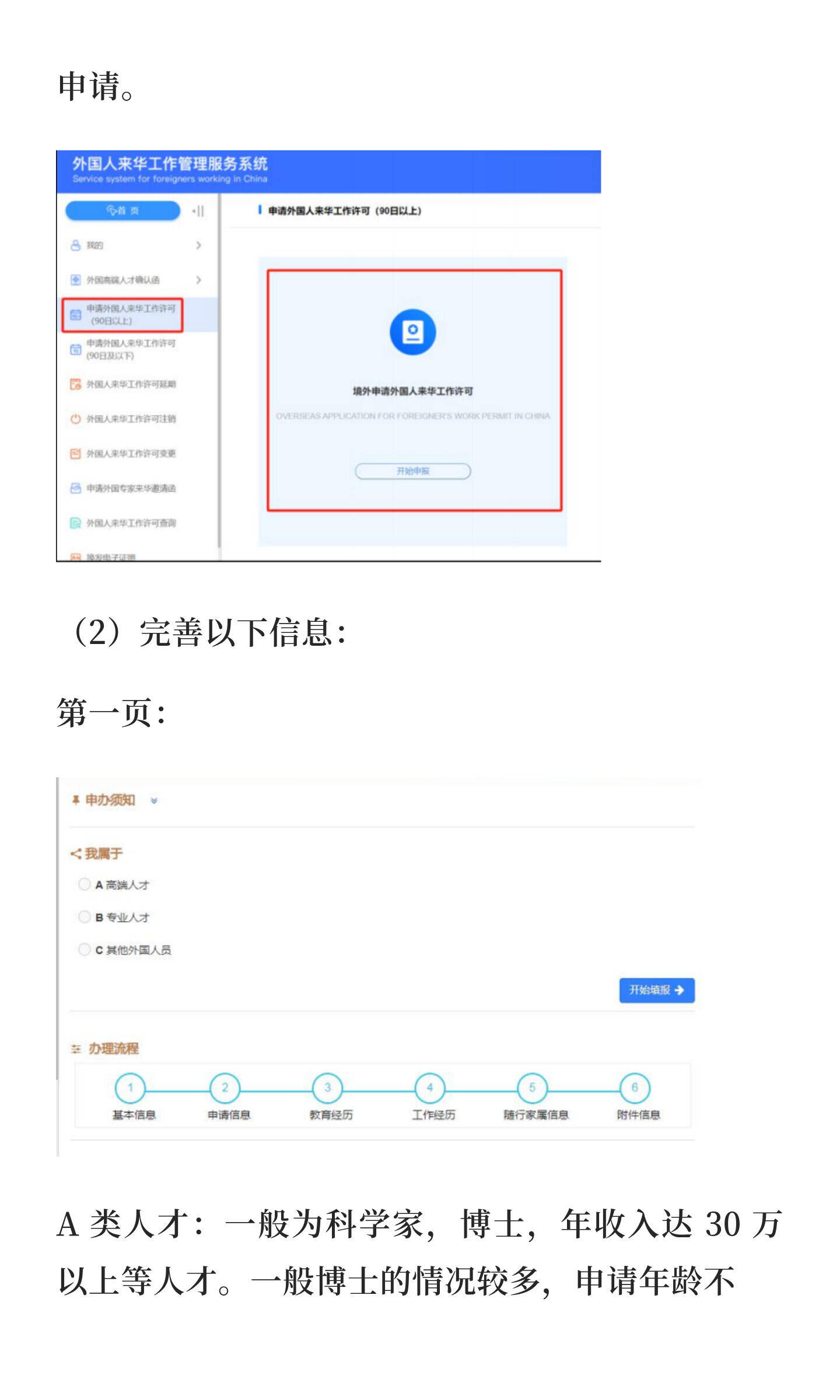
Phase 1: Pre-Application (Employer Side)
Step 1: Determine Eligibility & Job Category: The employer must confirm the position falls under the “Foreigner’s Work Permit” category (e.g., A, B, or C class). Class B (Professional) is the most common.
Step 2: Prepare and Authenticate Documents: The most time-consuming phase. Both the degree and non-criminal record must be authenticated by the Chinese embassy/consulate abroad.
Step 3: Submit Online Application: The employer submits the application through the “Foreigners Work Management Service System” (FWMSS) on the official website of the Ministry of Science and Technology.
Step 4: Pre-Approval & Notification Letter: Once the online application is approved, the employer receives a “Notification Letter of Foreigner’s Work Permit” which the applicant can use to apply for the Z visa.
Phase 2: Application for the Z Visa (Applicant abroad)


Step 5: Apply for the Z Visa: The applicant takes the Notification Letter, passport, and other required documents to the Chinese embassy or consulate in their home country to apply for a Z visa (Work Visa).
Phase 3: Post-Arrival & Onboarding (in China)
Step 6: Medical Examination: Upon arrival, the applicant must undergo a health check at a designated hospital in Hangzhou.
Step 7: Submit Physical Application for Work Permit: After the medical exam, the employer submits the physical application for the “Foreigner’s Work Permit” along with the medical certificate and other documents.
Step 8: Apply for Residence Permit: The final step is to apply for a “Foreigner’s Residence Permit” (valid for 1-5 years) at the Exit-Entry Administration Bureau of the Hangzhou Public Security Bureau.
Process Flowchart:
Pro Tip: Many companies, especially startups, find the process overwhelming. Partnering with Hangzhou Zhongbiao Accounting, which offers a comprehensive “Foreigner’s Work Permit + Foreign-related Tax Compliance” package, can manage the entire process from document authentication to residence permit application, allowing your team to focus on core business activities.
3. Common Pitfalls and How to Avoid Them
Navigating the bureaucratic maze is fraught with potential errors. Here are the most common pitfalls and how to sidestep them:
Pitfall 1: Unauthenticated Degree or Criminal Record: This is the #1 reason for rejection. Solution: Start the authentication process 2-3 months before the intended start date.
Pitfall 2: Incomplete or Incorrect Work Experience Letters: Generic letters lacking specific dates, job titles, and responsibilities are often rejected. Solution: Ensure letters are on company letterhead, stamped, and signed.
Pitfall 3: Mismatch Between Job Offer and Applicant’s Background: The job description must clearly match the applicant’s education and work experience. Solution: Craft a detailed job description that accurately reflects the applicant’s skills.
Pitfall 4: Delayed Medical Examination: The health certificate is valid for only 6 months. Solution: Schedule the medical exam immediately upon the applicant’s arrival.
Pitfall 5: Ignoring Local Policy Nuances: While the national framework is standard, local bureaus in Hangzhou may have specific requirements or interpretations. Solution: Work with a local expert, like Hangzhou Zhongbiao Accounting, who understands the nuances of the Hangzhou Exit-Entry Administration Bureau.
4. The Role of Professional Consultation: Why You Need a Local Expert
Given the complexity and high stakes, engaging a professional consultant is not just a luxury; it’s a strategic necessity. A specialized service provider offers:
Document Pre-Checking: They can identify errors in personal and company documents before submission, saving weeks of delays.
Process Management: They track the entire process, from authentication to permit issuance, ensuring deadlines are met.
Local Policy Translation: They are up-to-date with any new local regulations or interpretations from the Hangzhou authorities.
Compliance Assurance: They ensure the entire process, including tax and social insurance registration, is fully compliant.
Practical Recommendation: For a seamless experience, consider a partner like Hangzhou Zhongbiao Accounting. They offer a specialized “Foreigner’s Work Permit + Foreign Tax Compliance” service. This is particularly valuable for foreign-invested enterprises (FIEs) or startups hiring their first foreign talent. Their expertise in both local business registration and foreign-related tax matters ensures that when your new employee arrives, their payroll, tax, and social insurance are all set up correctly from day one. They handle the entire lifecycle, from work permit application to residence permit, allowing you to avoid common administrative headaches.
5. Beyond the Permit: Ensuring Long-Term Compliance
Receiving the work permit is just the first step. Maintaining compliance is an ongoing responsibility.
Key Post-Permit Obligations:
Tax Registration & Monthly Reporting: The foreign employee must be registered for tax and have their salary taxes (Individual Income Tax) reported monthly.
Social Insurance Enrollment: In most cases, foreign employees must be enrolled in China’s social insurance system (pension, medical, unemployment, work injury, and maternity).
Work Permit Renewal: The work permit must be renewed before its expiry date. The process is similar to the initial application but requires a current work permit and residence permit.
Residence Permit Renewal: The residence permit is tied to the work permit. It must be renewed annually or biennially.
The Bottom Line: A single mistake in tax filing or social insurance can lead to fines or even jeopardize the employee’s work permit. Engaging a professional service that handles both the permit and the ongoing financial compliance is the most efficient and secure approach. Hangzhou Zhongbiao Accounting provides this integrated service, ensuring your foreign talent acquisition is not just fast, but also fully compliant for the long term.
Final Practical Guide: Your 2026 Action Plan
Start Early (3-4 months before start date): Initiate the document authentication process.
Consult a Specialist: Engage a professional service like Hangzhou Zhongbiao Accounting to pre-check all documents and understand the latest 2026 local requirements.
Partner with the Employer: Ensure the company has a clear job description, valid business license, and tax payment records.
Prepare for the Z Visa: The online pre-approval is the first official step. The employer must submit the application online.
Post-Arrival, Coordinate Quickly: The medical exam, work permit application, and residence permit application must be executed in a tight sequence.
Set Up Ongoing Compliance: Ensure the foreign employee’s tax and social insurance are correctly registered and managed from day one.
By following this structured approach and leveraging specialized local expertise, you can navigate the 2026 Hangzhou Foreigner’s Work Permit process with confidence, turning a potential administrative burden into a smooth, professional operation.