
While even the official IFA organizers are emphasizing Physical AI,AI has naturally become an omnipresent and pivotal element at this year’s show—with audio standing out as a particularly noteworthy highlight.As the LeiTech exhibition scouting team arrived at the subway station near the Berlin International Congress Centre, they were immediately greeted by an outdoor advertisement for PLAUD, a leading AI voice-recording brand, promoting its AI recording card. This year,the integration of AI with audio hardware has clearly emerged as a core subcategory within AI hardware—and AI audio devices showcased at IFA 2026 demonstrated remarkable diversity:some are dedicated voice recorders; others are true wireless stereo (TWS) earbuds equipped with AI capabilities.

(Photograph source: LeiTech IFA Reporting Team, on-site)
AI Audio Hardware Emerges as a Core Category Within AI Hardware
The number of AI audio hardware products at this year’s IFA is substantial—but brands have adopted distinct strategic entry points: some aim to redefine the form factor of recording devices; others focus on niche application scenarios; and still others leverage proprietary chips.
1. Plaud: Transforming the AI Voice Recorder into an Ear-Worn Device
Plaud is among the earliest beneficiaries in the AI voice recorder segment. Its Note series gained traction internationally, while the NotePin—designed as a clip-on device that attaches seamlessly to shirt collars—proved especially popular.
This year, Plaud’s IFA booth spotlighted not its traditional recorder, but the newly launched Plaud One earbuds—defined as “AI Meeting Notes Earbuds.” Designed for all-day wear, they capture meetings and conversations, transcribe speech to text in real time, and then leverage AI to draft emails and presentation outlines.

(Photograph source: LeiTech IFA Reporting Team, on-site)
According to official information, the product sold out within one day following its U.S. pre-order launch at the end of August. Furthermore, Plaud plans to roll out over-the-air (OTA) updates to deliver enhanced AI functionality.
A key feature of these earbuds is their built-in eSIM, significantly boosting their independence. During use, they can directly access cloud-based AI capabilities via cellular networks—or instantly retrieve information—reducing reliance on smartphones compared to conventional AI earbuds.
2. Timekettle: Embedding Real-Time Interpretation into Calls and Video Playback
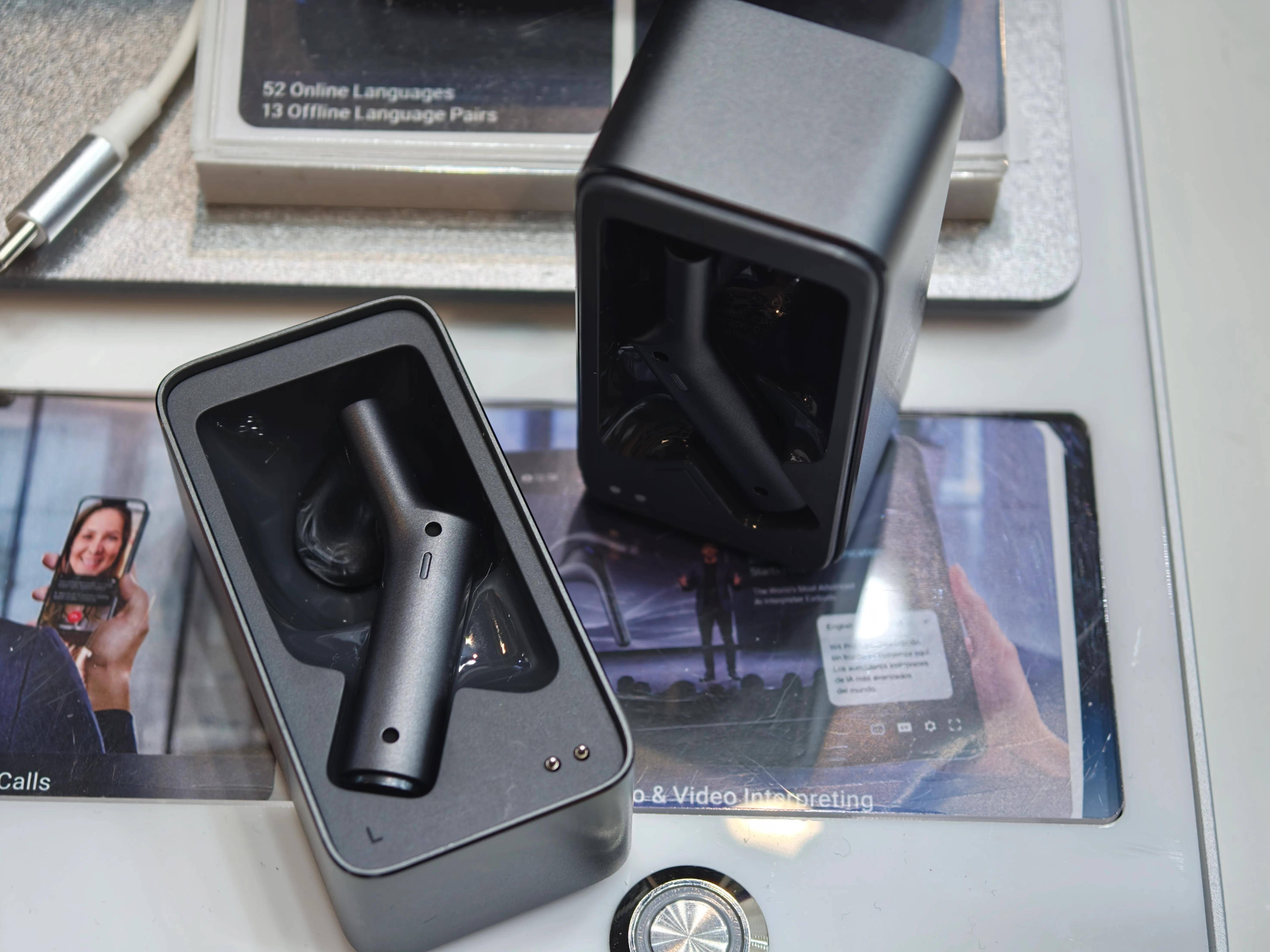
Timekettle—a longtime partner and pioneer in AI translation earbuds—launched its W4 Plus at IFA, an upgraded iteration of the W4 model with positioning closer to its premium Pro series. The W4 series’ hallmark function is real-time simultaneous interpretation: the W4 Plus supports online translation across 52 languages and offline translation for 13 languages. Its enhancements lie in broader scenario coverage—extending real-time translation beyond face-to-face conversations to phone calls and foreign-language video playback, all without requiring users to pull out their smartphones.
(Photograph source: LeiTech IFA Reporting Team, on-site)
Hardware-wise, its voice pickup system has been refined, and its AI features upgraded: post-conversation summaries generate notes in real time; call recordings are automatically transcribed and organized; and industry-specific terminology databases ensure greater accuracy in professional contexts.
Priced at $299 for the base model, full AI functionality requires a subion at $14.99 per month. The product went on sale September 6 via the official website and Amazon—enabling attendees who fall in love with it at the show to place orders immediately.
3. Boya: Three Distinctively Designed AI Recording Devices
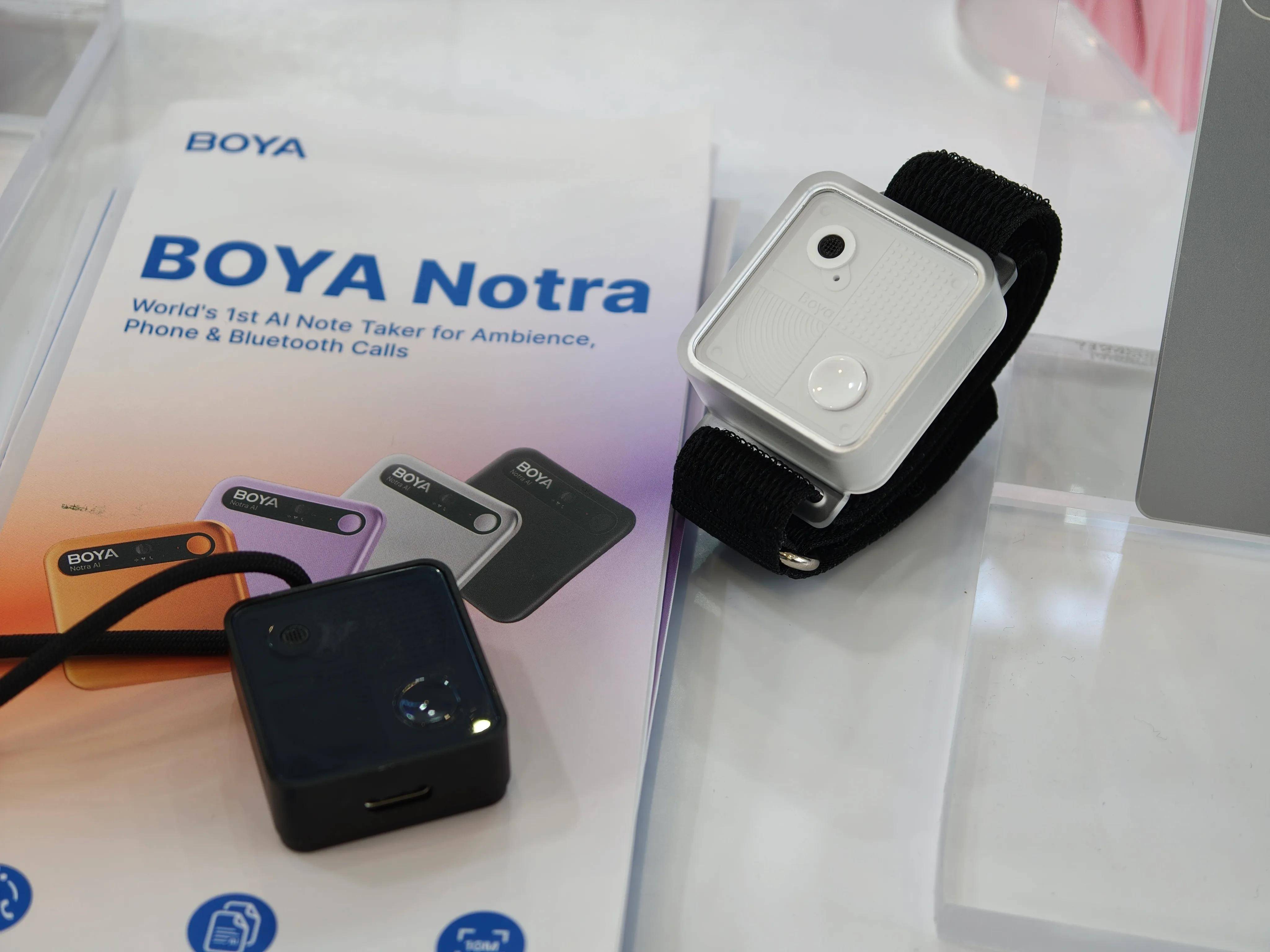
Boya unveiled three AI-powered recording devices at IFA. The Neo—featuring a square, colorful —is a newly launched product targeting students and journalists, supporting tranion in over 140 languages.

(Photograph source: LeiTech IFA Reporting Team, on-site)
The ultra-compact Nano resembles a simple black-and-white cube, complete with an adjustable strap enabling wrist or neck wear. Because it operates independently of smartphones, it omits bone-conduction uplink microphones in favor of a multi-microphone array optimized for ambient sound capture—making it ideal for on-the-go usage. Its wrist-worn mode proves especially convenient during lectures or interviews where hands remain occupied.
(Photograph source: LeiTech IFA Reporting Team, on-site)
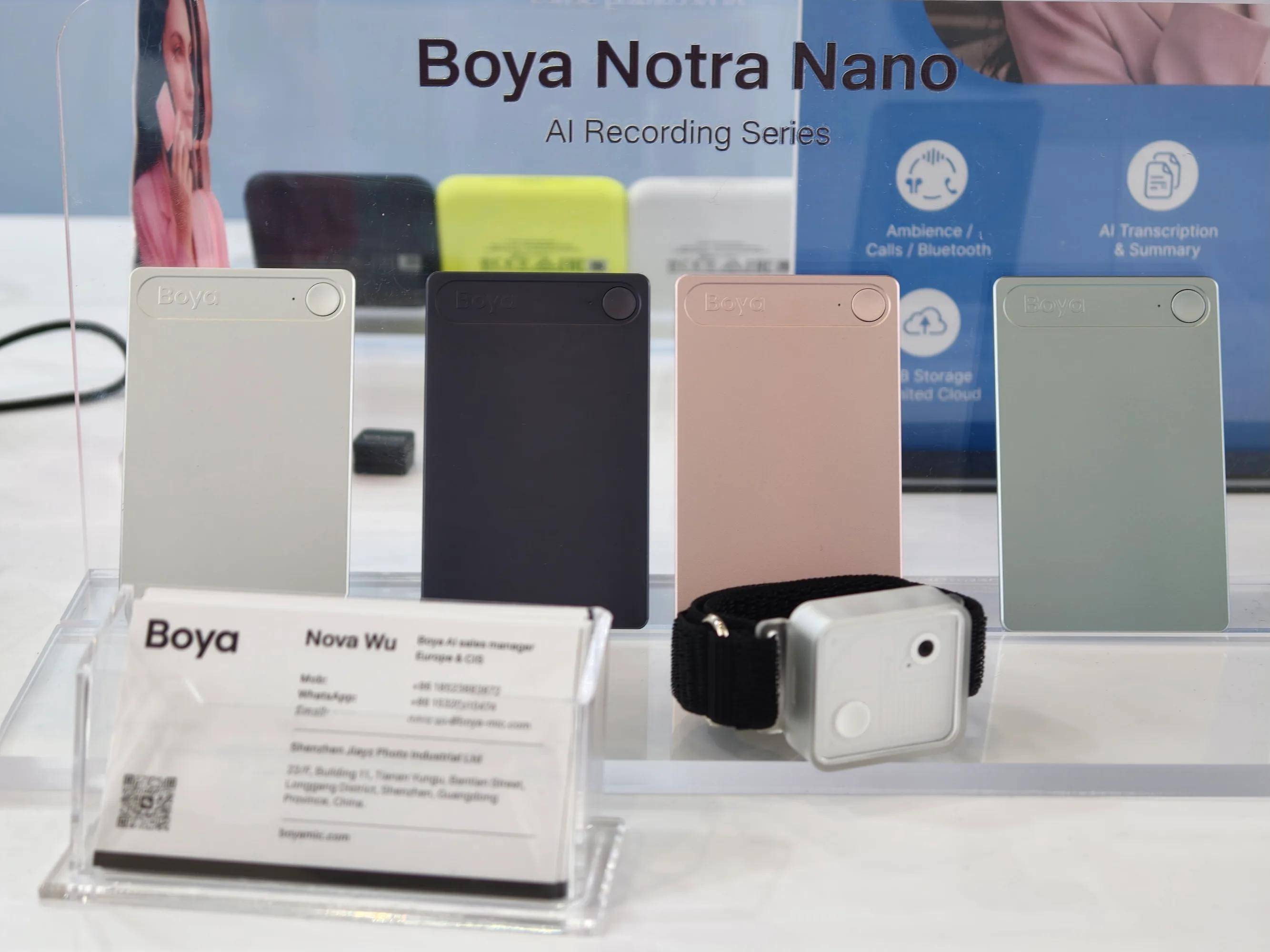
The Air adopts a slim, rectangular card-like design—slip easily into any pocket. Charging differs across models: both the Neo and Nano support direct USB-C charging, whereas the Air uses magnetic charging. Additionally, the Neo integrates built-in magnets allowing it to attach directly to the back of smartphones—eliminating the need for extra magnetic cases required by certain other recording cards.
(Photograph source: LeiTech IFA Reporting Team, on-site)
These three products differ markedly in form factor—each reflecting thoughtful industrial design tailored to specific user scenarios. Regardless of your recording needs, there’s a device perfectly suited to you.
4. Viaim: Bringing the Conference Room to Your Earbuds and Speakers
Viaim is the international-facing brand of Future Intelligence, whose underlying technology—used in iFLYTEK’s conference earbuds—is better known domestically. At IFA, Viaim introduced two new products.One is a pop-out-style conference recording earbud—an innovative solution addressing a common pain point: earbuds must be easy to store when idle yet instantly deployable during impromptu meetings. The pop-out mechanism satisfies both requirements simultaneously.

(Photograph source: LeiTech IFA Reporting Team, on-site)
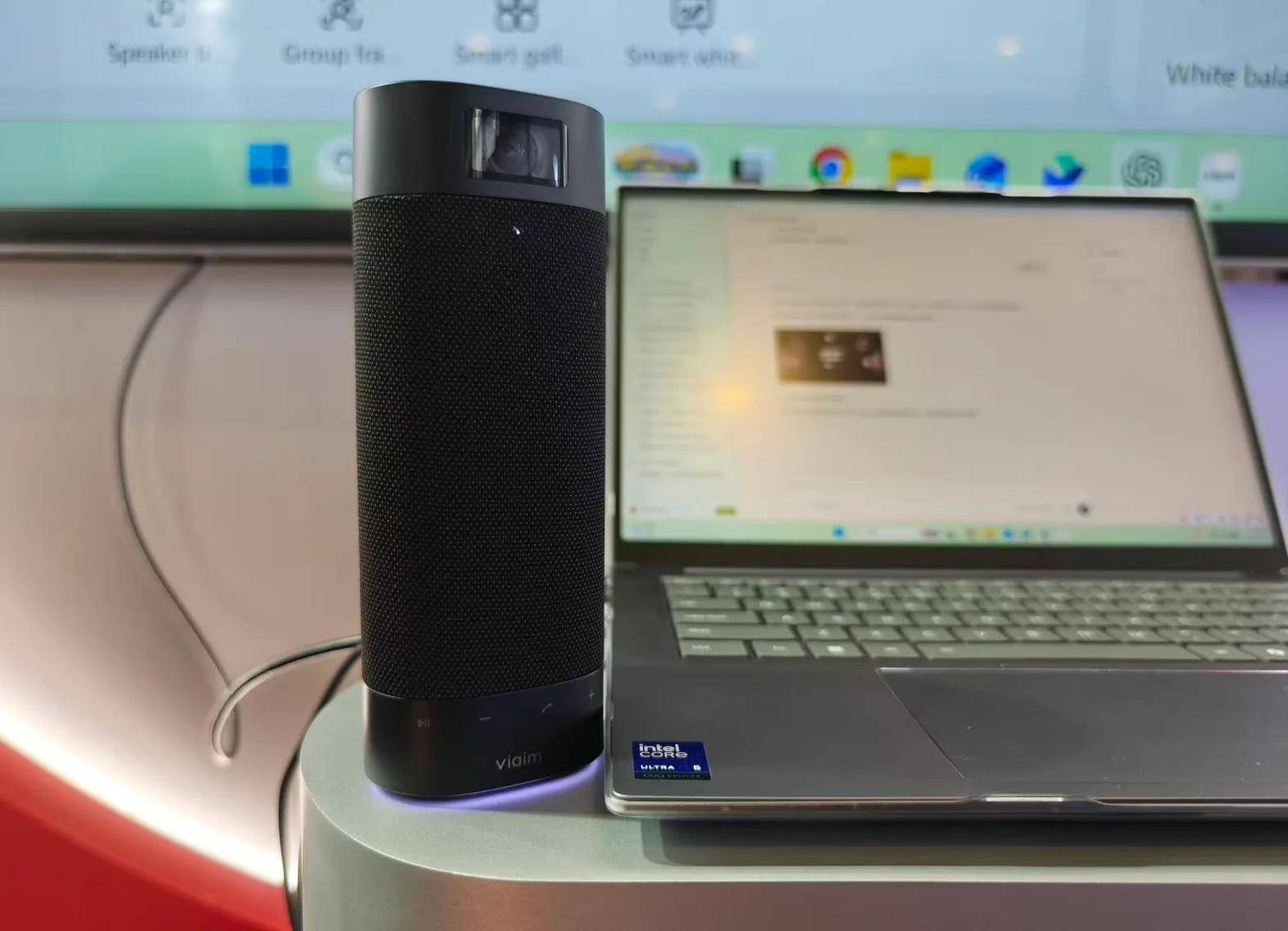
The second is a speaker specifically engineered for video conferencing, featuring an integrated camera usable as the primary video feed. Combined with four omnidirectional microphones and high-power speakers, it enables instant meeting initiation—and post-meeting tranion via companion PC software.
(Photograph source: LeiTech IFA Reporting Team, on-site)
5. iFLYTEK: The World’s Thinnest E-Ink Tablet—Optimized for Meetings and Note-Taking
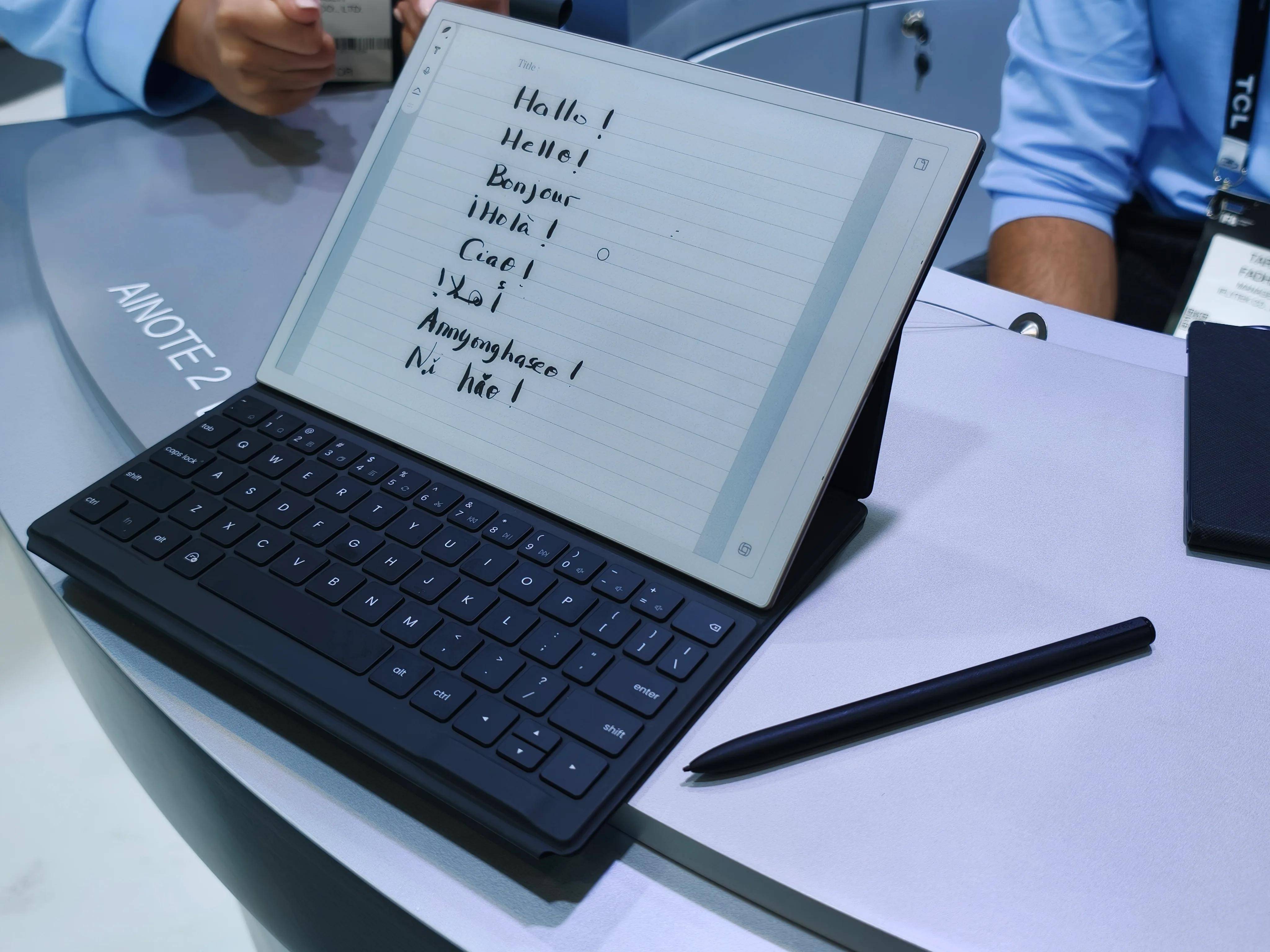
iFLYTEK brought its AINOTE 2 Cicada E-Ink Tablet to Berlin—the thinnest e-ink tablet globally—designed to bring meeting note-taking and speech-to-text tranion onto e-ink displays. It supports offline real-time tranion: placed on a desk during meetings, spoken content converts instantly to text. Paired with a stylus, users can annotate, highlight, and edit trans directly—and AI further organizes meeting content into actionable to-do items.
(Photograph source: LeiTech IFA Reporting Team, on-site)
Compared to smartphone recording apps, its e-ink display eliminates distracting notifications and reduces eye strain during extended viewing; versus traditional voice recorders, it adds a functional screen for both viewing and handwriting—allowing immediate annotation and organization post-tranion.
This tablet has already launched in China and now makes its international debut in Berlin—giving overseas users their first hands-on experience. iFLYTEK’s product philosophy is clear: the value of AI audio extends far beyond earbuds and recorders—it can embed itself as a capability wherever “listening and note-taking” are needed.
6. Anker: Proprietary THUS Chip Powers AI Earbuds That Listen and Take Notes Simultaneously
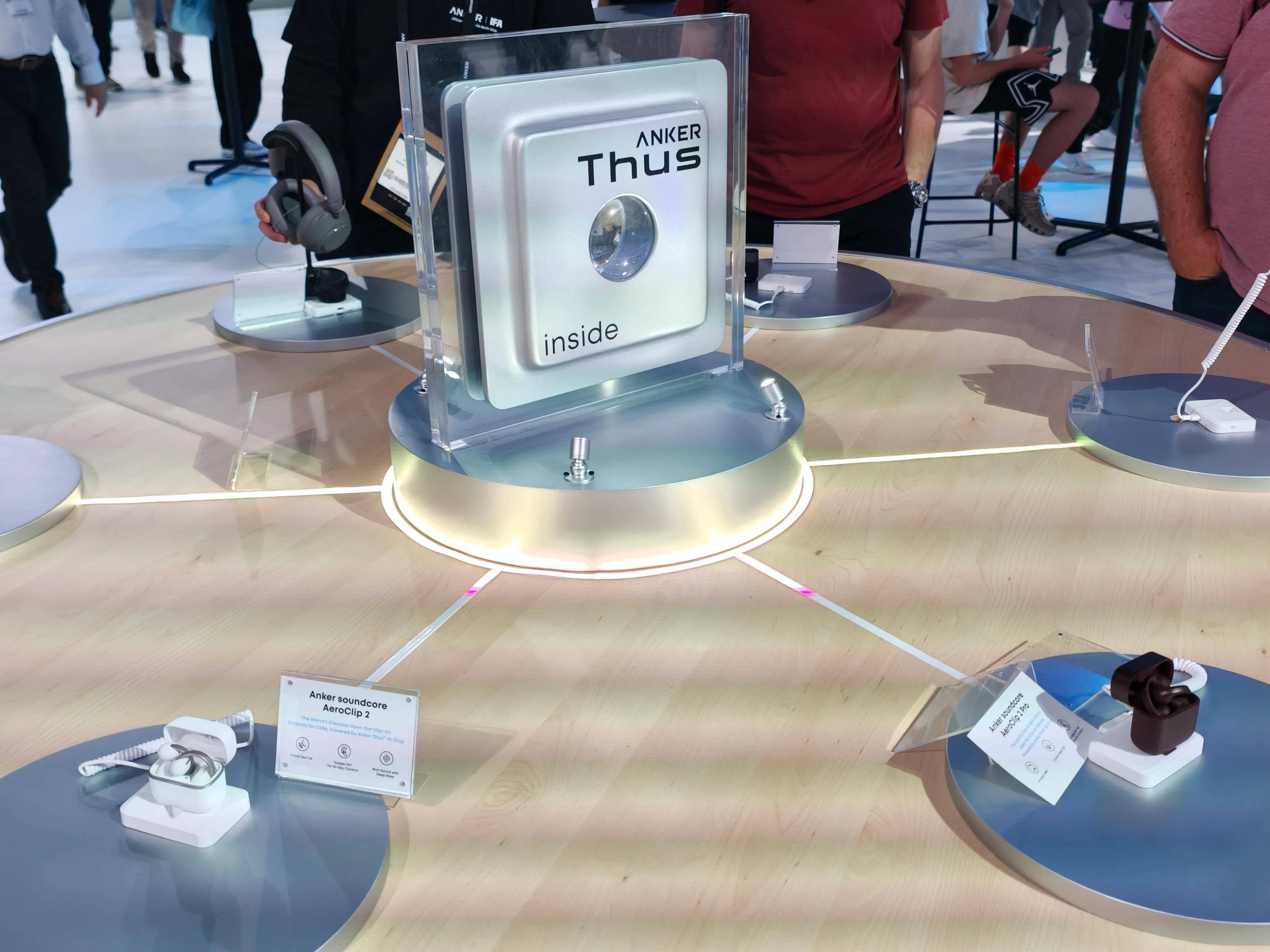
Anker’s newly launched AeroClip 2 Pro is an open-ear clip-on earbud highlighting AI note-taking—capturing key points in real time as users listen. Its core enabler is Anker’s proprietary THUS chip, delivering sufficient on-device compute power to run AI functions locally—without relying on smartphones.
(Photograph source: LeiTech IFA Reporting Team, on-site)